Skip to content
Clear communicationFree inspections
Call now (312) 555-0190
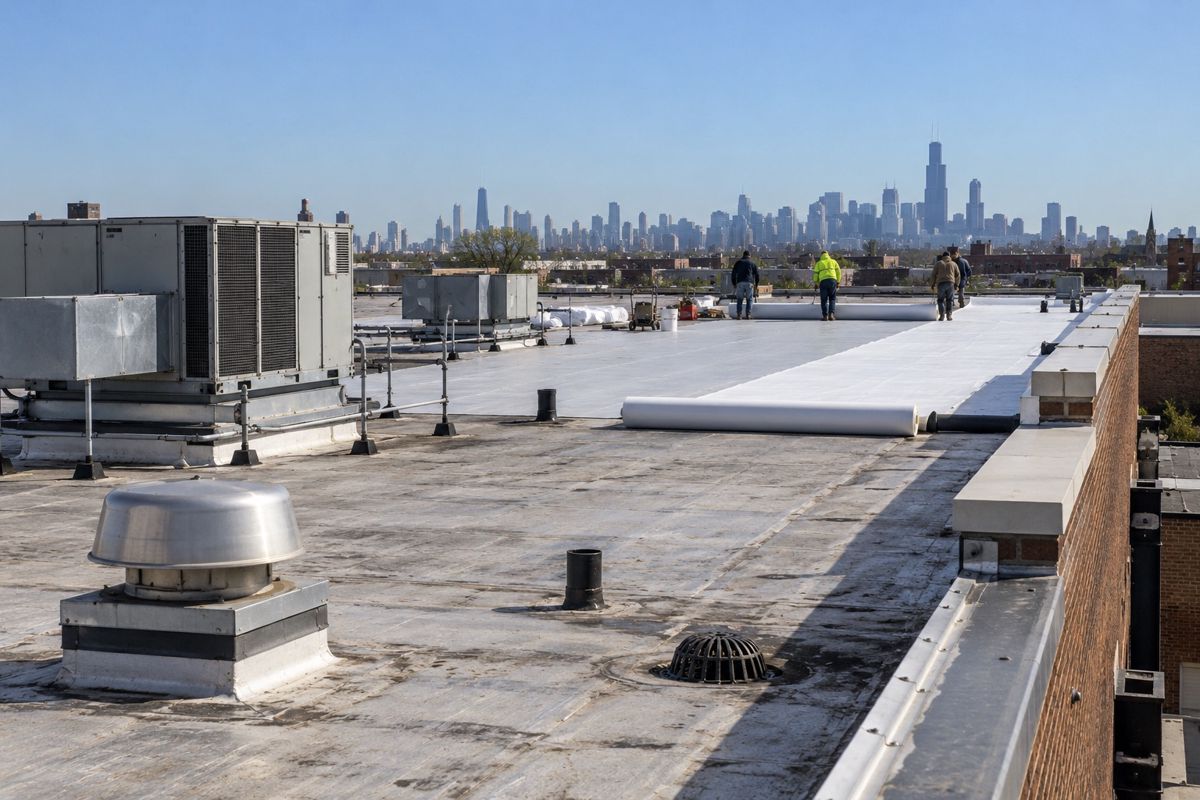
Crew installing a white membrane on a flat commercial roof in Chicago

Commercial roofs in Chicago

Commercial roofing in Chicago for flat and low-slope buildings

Repair, recover or replace a flat roof with a clear scope, a written quote and a plan that keeps your building running.

  • Flat and low-slope roof systems
  • Phased work around tenants
  • Written scope before work starts

Step 1 of 3

What do you need?

What does commercial roofing in Chicago involve?

Most commercial buildings in Chicago have flat or low-slope roofs. These roofs shed water slowly, so seams, flashing and drains matter more than they do on a pitched house roof. Work usually falls into one of three groups: repair of leaks and failed seams, recovering or coating an aging roof, or a full tear-off and replacement.

Common flat roof systems include:

  • TPO and PVC: single-ply sheets, often white, with heat-welded seams.
  • EPDM: a rubber membrane that is common on larger low-slope roofs.
  • Modified bitumen: layered asphalt sheets, often torched or mopped in place.
  • Built-up roofing: alternating layers of felt and asphalt, a long-time system on older city buildings.
  • Coatings: liquid products applied over a sound roof to extend its life.

Which flat roof system fits my building?

There is no single right answer. The choice depends on the age of the building, how much weight the structure can carry, the condition of the current roof, your budget, and how much foot traffic and rooftop equipment the roof has. Cold winters, summer heat and ponding water all shape how a system ages.

Chicago also has energy code rules that can affect roofs on some projects, such as insulation levels and reflective surfaces. The rules depend on the building and the scope of work, so ask your contractor to check what applies and to say so in the quote.

If you are unsure what condition your roof is in, a roof inspection can give you a written baseline. That helps you decide between a repair, a coating, a recover or a full replacement.

What usually causes flat roofs to fail here?

Most flat roof problems start small and grow with the seasons.

  • Ponding water. Water that stays on the roof for days stresses the membrane and seams.
  • Freeze and thaw. Repeated cycles open seams, split flashing and crack old coatings.
  • Blocked drains and scuppers. Leaves and debris hold water on the roof and push it toward edges and walls.
  • Rooftop penetrations. Vents, pipes and equipment curbs are common leak points when flashing ages.
  • Foot traffic and deferred upkeep. Service visits and missed inspections wear down a roof faster.

Small leaks can soak insulation, and wet insulation is expensive to dry or replace. Fast repair of a small leak often saves money later. For urgent leaks, see our page on roof repair.

We do not quote prices online, because commercial roofs vary too much. These points shape the number:

  • Roof area and shape. More area means more material, labor and time.
  • System chosen. TPO, EPDM, modified bitumen, built-up roofing and coatings each cost differently.
  • Existing layers and insulation. Wet insulation or several old layers add tear-off and disposal work.
  • Drainage fixes. Adding slope with tapered insulation, new drains or scuppers raises the cost.
  • Access and equipment. Cranes, hoists, street closures and tight alleys all play a role.
  • Phasing and permits. Working in sections around tenants and pulling city permits can add steps.

Ask about manufacturer warranty options and read what they cover in the quote. A warranty usually has conditions about installation and upkeep, so ask what you would need to do.

How long does it take, and when should I call?

A small repair may take a day. A full replacement on a mid-sized building can take days to weeks, depending on size, weather and how work is phased. Rain, snow and cold can stop single-ply and bitumen work, and a good plan includes weather days.

What to expect on site

Expect rooftop access points to be marked, debris chutes or hoists to be set up, and noise during tear-off. Tell the crew about tenant hours, loading areas, air intakes and sensitive equipment so the work can be planned around them.

Call when you see ceiling stains, ponding water, loose seams or a roof that is clearly past its prime. You can also read about our storm damage repair service or go back to the Chicago roofing home page.

  • Clear communication
  • Free inspections
  • Written estimates
  • Local crew

Questions about roofing in Chicago

Do you work on occupied buildings?

Commercial roof work is commonly done while tenants stay in the building. Plan the schedule, access points, noise hours and protection of rooftop equipment with the crew before work starts. Tell us about air intakes, deliveries and tenant hours so the plan fits your building.

Should I repair, coat or replace my flat roof?

It depends on how much of the roof is wet, split or worn. Isolated problems may need only repair. A sound roof with surface wear may suit a coating. A roof with widespread wet insulation or many failed seams usually points to replacement. A roof inspection gives you the facts to decide.

Which flat roof type lasts longest?

Lifespan depends on the system, the installation quality, drainage and upkeep, not only the material name. Every type can fail early with poor details or ponding water, and every type benefits from regular checks. Ask your contractor to explain the expected life of each option for your building.

Do energy code rules apply to my roof?

They can, depending on the building and the scope of work. Chicago has energy requirements that may affect insulation and roof surface choices on some projects. Ask your contractor to confirm what applies to your address and put it in the quote, and check with the city if you are unsure.

What does a commercial roof warranty cover?

Terms vary by manufacturer and by the type of warranty. Many cover materials, some also cover workmanship, and most have conditions about installation and upkeep. Ask for the written warranty terms before you sign, and keep records of inspections and repairs.

How it works

  1. Call or request a quote

    Tell us what is happening with the roof.

  2. Free inspection

    A roofer checks the roof and gives a written price.

  3. Work done right

    Clean crew, nail sweep, warranty in writing.

Request commercial roofing

Tell us what you need and we call you back.

No obligation.

Step 1 of 3

What do you need?

Ready when you are

Call now or request a quote online.

(312) 555-0190
Takes about 30 seconds. Get my free quote