Skip to content
Clear communicationFree inspections
Call now (312) 555-0190
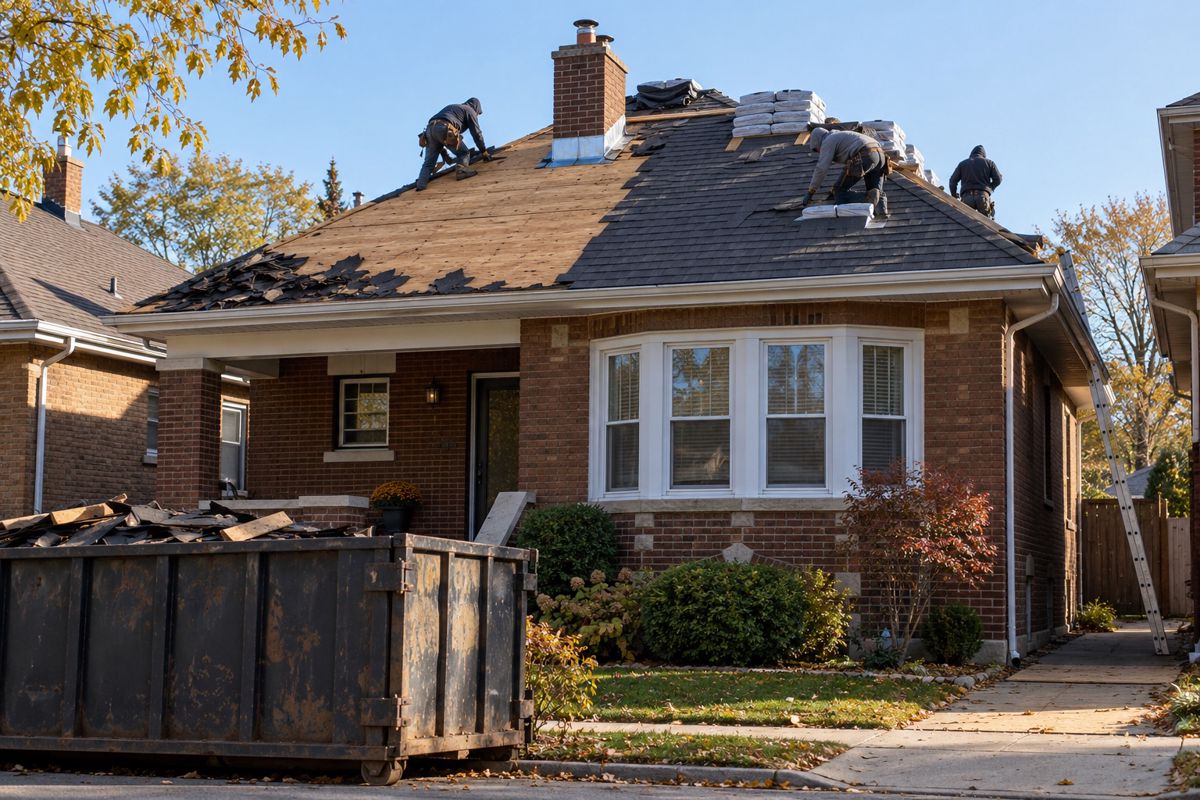
New shingles being installed on a Chicago bungalow roof during tear-off

Roofing in Chicago, IL

Roof replacement in Chicago, planned step by step

A full tear-off and a new roof, explained before it starts. You get a written scope, a clear order of work and a cleanup plan.

  • Written scope and quote before work starts
  • Decking checked once old roofing is off
  • Cleanup plan agreed up front

Step 1 of 3

What do you need?

What does a roof replacement in Chicago involve?

A roof replacement means taking the old roofing off down to the wood deck, fixing what is wrong underneath, and installing a new roof system. On a typical Chicago bungalow or brick single-family home that usually means asphalt shingles. On a two-flat, a three-flat or a low-slope porch roof it may mean a rolled or membrane system instead.

The main steps are the same on most jobs:

  • Remove the old shingles or membrane and the underlayment.
  • Inspect the deck and replace any soft, wet or split boards.
  • Install ice and water protection along the eaves and in valleys, where Chicago winters cause the most trouble.
  • Fit new underlayment, flashing, vents and the finished roof surface.
  • Clean the yard and gutters and check the finished work.

Ask for each of these steps to be written into your quote so nothing is left to guesswork.

How do I know I need a replacement and not a repair?

Repair makes sense when damage is limited to one area and the rest of the roof is in decent shape. Replacement makes sense when problems are spread across the roof. Signs that point toward replacement include shingles that curl, crack or lose granules over large areas, repeated leaks in different places, daylight showing in the attic, and a sagging deck.

Age matters too. Many asphalt shingle roofs are planned around twenty to thirty years, but Chicago freeze and thaw cycles, summer heat and wind off the lake can shorten that, especially where attic ventilation is poor. If you are not sure, a roof inspection gives you a written picture of the roof before you spend serious money. For a single leak or a few lifted shingles, roof repair may be the sensible first step.

What changes the price of a roof replacement in Chicago?

We do not list prices on a web page, because every roof is different. These are the things that move the number most:

  • Size and pitch. A steep roof with dormers takes more time and safety gear than a simple low-slope roof.
  • Material. Asphalt shingles, metal, rubber membrane and modified bitumen all cost different amounts.
  • Deck condition. Rotted or wet decking found after tear-off adds boards and labor.
  • Layers. Removing two layers costs more than removing one.
  • Details. Chimneys, skylights, parapet walls and tight rear access on a city lot all add work.
  • Permits and disposal. City permit fees and dumpster placement on a narrow street or alley can affect the total.

A written quote that names the materials and explains how decking problems are handled makes bids much easier to compare.

Many single-family roofs in the city take one to three days when the weather cooperates. Larger multi-unit buildings and flat roofs can take longer. Rain, snow and high wind can push the schedule, and a good crew tells you when a day is lost rather than leaving the roof open.

What to expect on the day

The crew arrives early, covers landscaping and sets up a place for debris. Expect noise from tear-off and nailing. Move cars away from the house, take pictures off walls that share the roof framing, and keep pets inside. Tell the crew where you want materials placed and where the dumpster can go, since many Chicago lots have little space.

At the end of the job, the crew should sweep the yard and walk the property with you.

Do I need a permit, and when should I call?

Chicago generally requires a building permit for a roof replacement, and the contractor usually handles the paperwork. Rules differ between the city and nearby suburbs, so ask your contractor to confirm what applies to your address. Illinois also has licensing rules for roofing contractors, so ask to see a contractor's license and proof of insurance before you sign anything.

Call when you see leaks, curling shingles or storm damage, or when a roof is near the end of its life. If you are still comparing options, start on our Chicago roofing home page, or read about storm damage repair if a recent storm is the reason. Roofing crews often get busy in spring and after big storms, so planning early helps.

  • Clear communication
  • Free inspections
  • Written estimates
  • Local crew

Questions about roofing in Chicago

How much does a new roof cost in Chicago?

It depends on roof size, pitch, material, deck condition and access. A price on a web page would only be a guess. After a visit to your roof, you get a written quote that lists the material, the steps and how decking problems are handled, so you can compare it with other quotes on the same terms.

Can new shingles go over the old roof?

Some building codes allow one extra layer in certain cases, but a full tear-off lets the crew see and fix the deck, flashing and edges. Many roofers prefer tear-off for that reason. Ask your contractor what applies to your roof and your address, and have the answer written into the quote.

What roofing material suits a Chicago bungalow?

Asphalt shingles are the common choice because they suit hip and gable roofs and cost less than most alternatives. Architectural shingles look fuller and handle wind better than basic ones. Metal is another option on some homes. Slate and tile need a roofer with direct experience and a roof structure that can carry the weight.

Will my roof need new decking?

Nobody can be sure until the old roofing is off. Soft, wet or split boards are fairly common on older roofs with past leaks. A good quote says how decking will be priced, often per sheet, so a surprise does not become a dispute halfway through the job.

What time of year is best for a roof replacement?

Spring through fall gives the most workable weather, though crews are busiest then. Winter replacements are possible on dry, milder days, but cold can slow the sealing of shingles and snow can stop work. Planning ahead gives you more choice of dates.

Do I need to be home during the work?

Not always, but you should be reachable. The crew may need access to the attic, a gate or the yard, and they may need a quick decision if they find rotted decking. Agree on a contact method with the crew lead before the first day.

How it works

1

Call or request a quote

Tell us what is happening with the roof.

2

Free inspection

A roofer checks the roof and gives a written price.

3

Work done right

Clean crew, nail sweep, warranty in writing.

Request roof replacement

Tell us what you need and we call you back.

No obligation.

Step 1 of 3

What do you need?

Ready when you are

Call now or request a quote online.

(312) 555-0190
Takes about 30 seconds. Get my free quote